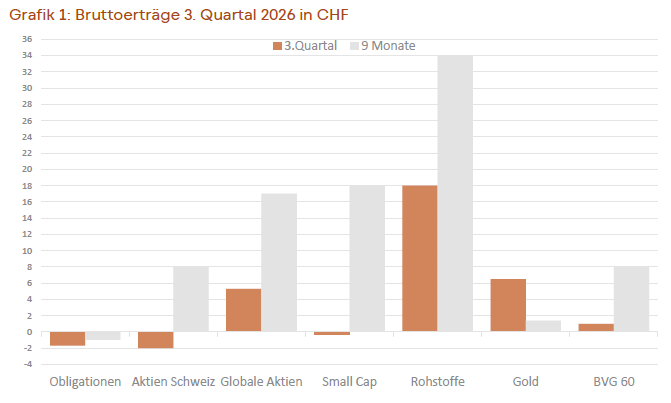
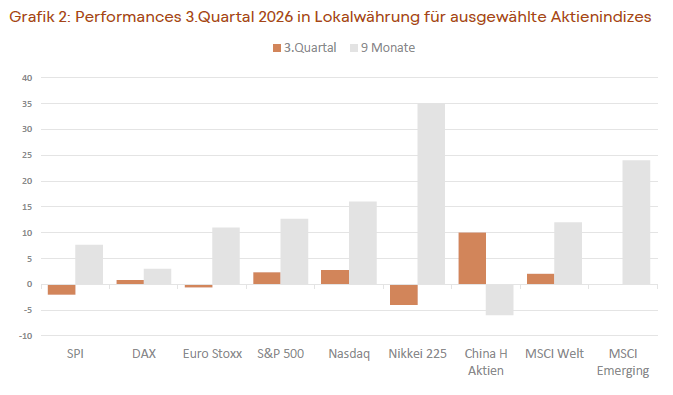
The global economy continued to hold up well in the face of high energy prices and geopolitical turmoil. Key economic indicators (S&P Global’s PMI) surprised to the upside, with readings pointing to stronger growth. Against this backdrop, many central banks opted to tighten monetary olicy. The Fed, for example, implemented its first interest rate hike of 0.25% and left the door open for further action. The ECB, scarred by its failure to manage the 2022 inflation, raised interest rates for the second time and made it clear that further steps could follow. Price stability in witzerland led the SNB to leave its key interest rate unchanged. Long-term interest rates rose sharply across currencies. This was due in part to heightened inflation fears and in part to specific developments in the U.S. dollar market, where excessive government debt and low private avings—combined with high levels of private investment—caused real interest rates to rise. Returns in the fixed-income sector were clearly negative, causing the annual performance of bond investments to turn red. On the currency front, interventions aimed at strengthening the yen roved to be of little effect; at the end of September, it was trading at the same level against the USD as at the beginning of the year. Due to relative changes in interest rates, the USD gained value against its major peers, resulting in losses for USD investors holding foreign assets. Commodities ose sharply once again, mainly due to rising energy prices. Meanwhile, interest rate trends weighed on precious metals. The recovery that began in the summer was nearly wiped out. Stock markets managed to hold their ground despite the deteriorating interest rate environment; the orld Index rose by about 3%. Artificial intelligence remained the key driver, with beneficiaries across various sectors. Earnings growth for stocks mostly exceeded already high expectations. Small- and midcap stocks were more affected by interest rate trends.
Market Trend – Are interest rates bringing the stock market to its knees?
Whether interest rates will continue to rise depends primarily on how inflation rates develop. A forecast of strong economic growth does not actually point to any easing of the situation. Meanwhile, the investment boom is clashing against subdued onsumer sentiment, meaning that higher costs cannot be passed on to consumers across the board. Assuming that the economy will not overheat, and that inflation will tend to ease somewhat, the interest rate hikes expected by the market from central banks in the U.S. and Europe will be smaller than anticipated. Consequently, this should have a favorable effect on long-term interest rates. Sustained strong earnings figures and a somewhat more relaxed interest rate environment, coupled with generally reasonable valuations in the stock markets, should therefore ensure a positive market trend in the final quarter.